
Yoga for Eating Disorders: A Trauma-Informed Approach in Houston
Apr 26, 2026
When most people hear “yoga for eating disorders,” they picture a gentle re-entry into movement — something to ease back into once recovery is further along. A soft, careful return to exercise after the harder work is done.
That’s not what this is.
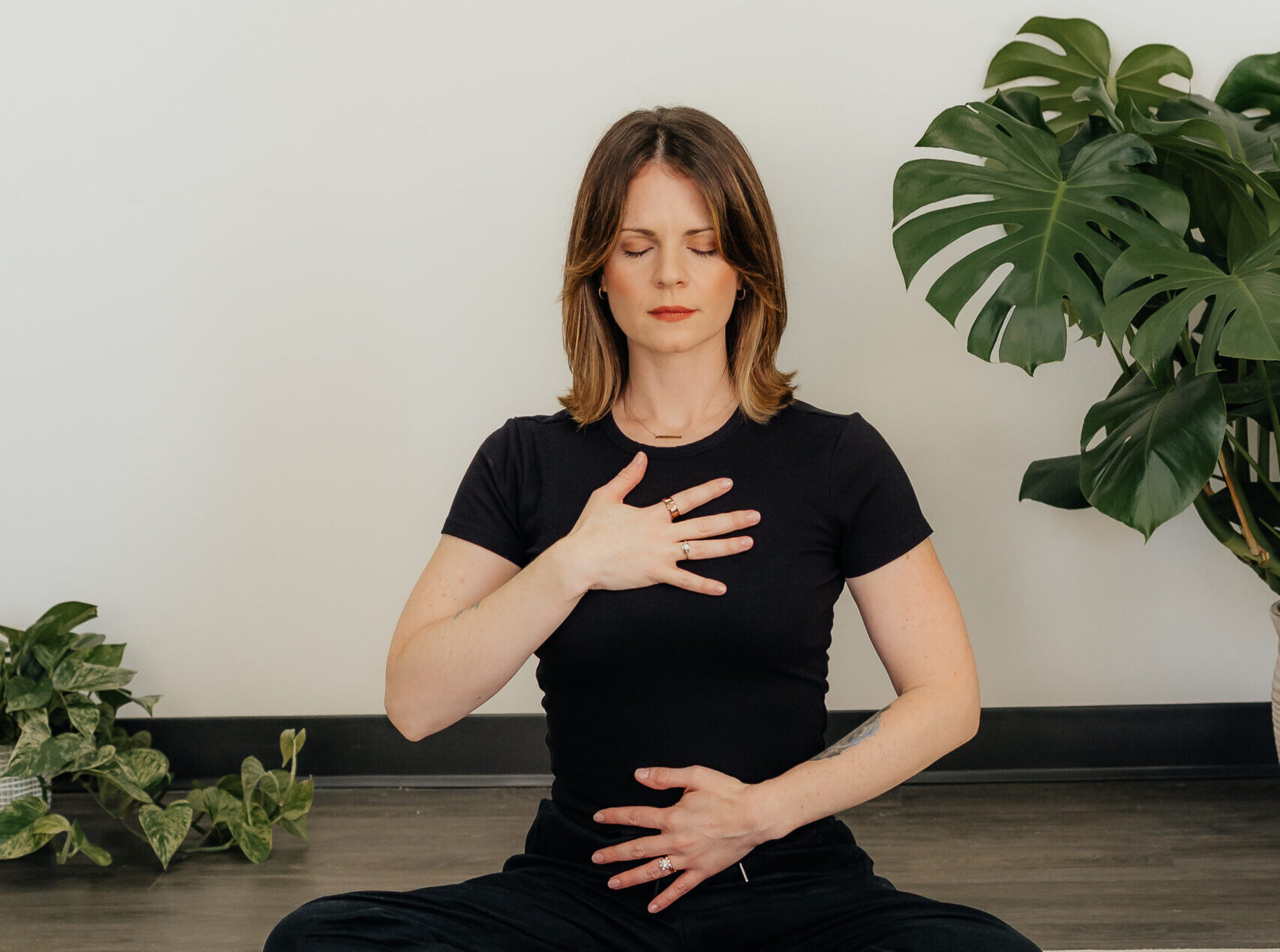
This isn’t about exercise at all. What we offer goes back to yoga’s original purpose, long before it became a fitness industry — the cultivation of presence, self-awareness, and reconnection with a body that trauma taught you to abandon. Breathwork. Meditation. Somatic awareness. The practices that help a dysregulated nervous system find its way back to safety.
And one more thing worth saying upfront: you don’t have to wait until you’re further along in recovery to start. Our practice meets the body exactly where it is.
Why Eating Disorders Rooted in Complex PTSD Require a Different Approach to Therapy
Most eating disorder treatment focuses on what happens above the neck — thoughts, beliefs, behaviors, food rules. And those things matter. But for a significant portion of people with eating disorders, particularly those with a history of complex PTSD, the eating disorder isn’t primarily a cognitive problem. It’s a body problem.
Trauma — especially the kind that develops over time, in relationships, during childhood — teaches the body that it isn’t safe. Dissociation becomes a survival strategy. The body becomes something to escape from, manage, control, or punish rather than something to inhabit. Hunger gets ignored. Fullness gets overridden. The body’s signals stop feeling like information and start feeling like threats.
This is where complex PTSD and eating disorders intersect in ways that most eating disorder treatment programs don’t fully address. The eating disorder didn’t develop in a vacuum. For many people it developed in direct response to a nervous system that learned, through real experiences of harm, that being in the body was dangerous.
Traditional eating disorder treatment and talk therapy address this at the cognitive and relational level — and that work matters. But for people whose eating disorder is rooted in complex PTSD, the body itself often goes unaddressed. The nervous system patterns and physiological responses that trauma shapes over time — including in the connective tissue and fascia — don’t shift through insight and conversation alone. They require direct, repeated, body-level experience over time. That’s what trauma-informed yoga specifically offers.
What Trauma-Informed Yoga Actually Is — And What It Isn’t
Most yoga classes are externally focused — the teacher directs, you follow, the goal is to get the pose right. For someone whose relationship with their body is already shaped by control, punishment, and disconnection, that dynamic can quietly replicate the problem rather than address it.
Trauma-informed yoga works differently. Nothing is required. Everything is offered. The teacher invites rather than instructs, and you decide what your body does with that invitation. This is a significant distinction for someone with an eating disorder. The eating disorder is often itself an attempt to control a body that never felt safe. A practice that returns choice to the person, rather than adding another layer of external direction, does something very different for the nervous system.
At Houston Healing Collective, a trauma-informed yoga session includes the full range of what yoga was built to offer — movement, breathwork, meditation, somatic awareness practices, and sound healing. The movement is there, and it matters. But it’s approached as exploration rather than performance. The breathwork isn’t decoration — it has a direct physiological effect on the nervous system. The meditation cultivates presence rather than demanding it. The somatic cues turn attention inward, toward what the body is actually experiencing, rather than outward toward how it looks or whether it’s doing it right.
This is what yoga looked like before it became a fitness industry. And it’s what eating disorders rooted in complex trauma actually need.
If any of this resonates, you can learn more about our eating disorder therapy in Houston here.
The Nervous System, Fascia, and Interoception: Why the Body Holds the Key
Complex PTSD reshapes the nervous system in ways that go far beyond thoughts and memories. The body gets locked into patterns of hyperarousal — scanning for threat, unable to settle — or hypoarousal, where shutdown and numbness become the default. Many people cycle between both. The eating disorder, in a lot of cases, is the nervous system trying to manage that dysregulation. Restriction, bingeing, purging, and overexercising are the body’s attempts to regulate a system that never learned another way.
Breathwork has a direct physiological effect on the nervous system — and trauma-informed yoga uses it in both directions. Certain breath practices activate the parasympathetic nervous system, supporting the body in moving out of hyperarousal and threat response. Others are more energizing, helping bring the system up from hypoarousal and the shutdown state that trauma also creates. This bidirectional regulation is clinically important — and often misunderstood. Trauma treatment isn’t only about calming down. For people who cycle between hyperarousal and hypoarousal, the goal is flexibility — a nervous system that can move through states rather than getting locked in them. Breathwork, practiced with that understanding, is one of the most direct tools available for building that capacity.
Yin yoga — a slower, more restorative practice involving longer-held passive poses — works specifically with the fascia, the connective tissue that runs throughout the body and holds the physiological patterns that trauma shapes over time. Where more active yoga practices work primarily with muscle, yin targets the deeper connective layers. For people carrying complex trauma in their bodies, this kind of work reaches something that more active movement doesn’t.
Interoception — the capacity to sense internal body signals like hunger, fullness, heartbeat, and emotional sensation — is another dimension of this work. Many people with eating disorders rooted in trauma have lost reliable access to these signals. The body’s messages stopped feeling safe to receive, so the nervous system learned to filter them out. Practices that gently rebuild body awareness begin to restore that access over time — and reconnecting with hunger and fullness cues is a nervous system process, not just a behavioral one.
We’ll go deeper on both fascia and interoception in dedicated posts. But even briefly, they point to why this work is clinically significant in ways that go well beyond what most people expect from yoga.
You Don’t Have to Wait Until You’re Further Along in Eating Disorder Recovery
This is worth saying directly because it’s one of the most common misconceptions we encounter — that yoga is something to add once the eating disorder is more under control. That the body needs to be in a certain place before this kind of practice is appropriate.
That’s not how we think about it — and it’s not how the practice works.
Chair yoga is specifically designed for bodies at every stage of recovery and every level of physical ability. For individuals who are still in medical recovery, navigating bone density changes, or simply not ready for a mat-based practice, chair yoga offers the same breathwork, somatic awareness, nervous system regulation, and body reconnection — in a format that meets the body exactly where it is.
Yin yoga, breathwork, and meditation practices woven throughout our sessions are similarly accessible — requiring no particular level of physical ability or stage of recovery.
How We Use Yoga at Houston Healing Collective
At our Houston practice, trauma-informed yoga isn’t a standalone wellness offering sitting separately from the clinical work. It’s woven into the fabric of how we treat complex trauma and eating disorders — available in multiple formats depending on what each person needs.
Trauma-Informed Group Yoga Classes
Our trauma-informed group sessions are designed specifically for people working through complex trauma or eating disorders. This is not a fitness class. The focus is on nervous system regulation, body reconnection, breath awareness, somatic cues, and the cultivation of a different relationship with physical experience. Sound healing is woven throughout. Sessions are invitational — no pose is required, no level of ability is assumed, and the pace is always responsive to the group rather than a predetermined sequence.
The group setting itself has therapeutic value. Being in a body alongside other people who are also learning to be in their bodies — without judgment, without performance, without comparison — begins to repair something that complex trauma often damages: the sense that it’s safe to be present with others.
Chair Yoga for All Bodies and All Abilities
Our chair yoga sessions are led by a Registered Yoga Teacher certified in chair yoga — making the practice genuinely accessible to people at every stage of recovery and every level of physical ability. All the same nervous system and body reconnection benefits, in a format that meets people exactly where they are. This isn’t a modified version of the real thing. It’s its own complete practice.
Individual Trauma-Informed Yoga Sessions
One-on-one sessions allow for a fully individualized approach — tailored to a person’s specific trauma history, their current nervous system state, their relationship with their body, and what they’re working on in their broader treatment. Individual sessions can integrate more directly with the therapeutic work happening in IFS-informed therapy, EMDR, or ketamine-assisted therapy, creating a coherent treatment experience rather than separate parallel tracks.
Somatic Practices Woven Into Therapy
Perhaps most distinctively — the principles of trauma-informed yoga don’t stay in the yoga room. Our therapists incorporate breathwork, meditation, somatic awareness practices, and body-based regulation techniques directly into therapy sessions. In an EMDR session, breath and body awareness help maintain the window of tolerance during trauma reprocessing. In IFS-informed therapy, somatic practices help access the felt sense of different parts. In ketamine-assisted therapy, breath and body awareness are part of both preparation and integration — helping the nervous system enter the experience with more capacity and process what emerges afterward.
This integration is intentional and clinically significant. It means the somatic work isn’t compartmentalized — it’s part of a coherent treatment approach that speaks the same language at every level.
Our facilitators are Registered Yoga Teachers with certification and specialized training in trauma-informed yoga, chair yoga, and yin yoga. Every session is designed with clinical understanding of trauma, the nervous system, and eating disorder recovery — not just yoga technique.
What Changes When You Find Safety in the Body
When someone with a history of complex trauma and an eating disorder begins to rebuild their relationship with their body — not through willpower or behavioral intervention alone, but through practices that directly address the nervous system and the body’s own experience — things shift that no amount of cognitive work produces on its own.
Hunger starts to feel like information rather than threat. Stillness becomes tolerable rather than unbearable. The body stops feeling like an enemy to be managed and starts feeling, gradually and imperfectly, like somewhere safe to be.
This isn’t quick work. For people with complex PTSD, the body has been a dangerous place for a long time. Rebuilding that relationship requires patience, clinical skill, and approaches that meet the nervous system where it is. That’s what trauma-informed yoga, practiced within a comprehensive clinical framework, offers — a path back to the body, which for many people is where recovery actually lives.
Yoga for Eating Disorders and Complex Trauma in Houston
If you’re working through an eating disorder — particularly one rooted in trauma or complex PTSD — and you want support that addresses what’s happening in your body, not just your thoughts and behaviors, we’d love to connect.
At Houston Healing Collective, our trauma-informed yoga offerings are part of a broader integrative treatment approach that includes IFS-informed therapy, EMDR, somatic therapy, and ketamine-assisted therapy. You can add yoga as a standalone service alongside therapy you’re already receiving elsewhere, or engage with it as part of a comprehensive treatment plan at our therapy practice.
Yes — particularly when practiced in a trauma-informed context. A 2020 randomized controlled trial published in the journal Eating Disorders found meaningful benefits of yoga in eating disorder treatment, including improvements in eating disorder symptoms and distress tolerance. For people whose eating disorder is rooted in complex trauma, trauma-informed yoga addresses the body-level disconnection that talk-based approaches often can’t reach on their own.
No — and this is one of the most important things to understand about how we practice. Chair yoga and yin yoga are specifically appropriate for bodies still in recovery, including those experiencing physical effects of an eating disorder. Breathwork and meditation practices require no physical ability at all. You don’t have to be anywhere other than where you are to begin.
Trauma-informed yoga prioritizes nervous system safety, personal agency, and body reconnection over physical performance. Unlike a standard yoga class, it is entirely invitational — no pose is required, choice is emphasized throughout, and the focus is on internal experience rather than external form. Sessions incorporate breathwork, meditation, somatic cues, and sound healing alongside movement.
Complex PTSD and eating disorders frequently co-occur — and trauma-informed yoga is specifically designed with both in mind. The practice addresses nervous system dysregulation, body disconnection, and the relationship between trauma and physical experience in ways that are directly relevant to complex PTSD. Sessions are paced carefully and never push beyond what the nervous system can tolerate.
Houston Healing Collective offers trauma-informed yoga for eating disorders and complex trauma in Houston — including group sessions, chair yoga, individual sessions, and somatic practices integrated directly into therapy. Contact us to learn more or schedule a free 20-minute consultation.
Back to Blogs

